
Selecting Circuit Protection for Mobile Electrical Systems
 Electrical systems in mobile equipment live in a tough world. High current, constant vibration, temperature swings, moisture, and long duty cycles are the norm—not the exception. Whether you’re building or maintaining construction equipment, agricultural machinery, emergency vehicles, work trucks, or marine systems, circuit protection is a critical design decision that directly affects reliability, serviceability, and safety.
Choosing the right protection device isn’t just about stopping overloads. It’s about protecting wiring, preserving electronics, minimizing downtime, and ensuring the system behaves predictably when something goes wrong.
Why Mobile Electrical Systems Need Special Attention
Unlike stationary industrial systems, mobile electrical systems are powered by batteries and alternators operating under constantly changing conditions. Loads cycle on and off, motors draw high inrush current, and wiring is exposed to vibration and mechanical stress.
One of the most severe electrical events in these systems is load dump. When a battery is disconnected while the alternator is charging, system voltage can spike well beyond normal operating levels. These transients can damage electronic modules, shorten component life, or cause intermittent faults that are difficult to diagnose.
Effective circuit protection helps contain these events, isolates faults, and limits the damage to the smallest possible section of the system.
The Role of Circuit Protection in System Design
At its core, circuit protection serves two primary purposes: To protect the wiring from overheating or failure due to excessive current, and to protect connected equipment from fault conditions that could cause damage or unsafe operation.
Protection devices must always be matched to the current-carrying capacity of the wire—not just the load. A fuse or circuit breaker that allows more current than the wire can safely handle puts the entire system at risk.
Fuses: Straightforward and Reliable
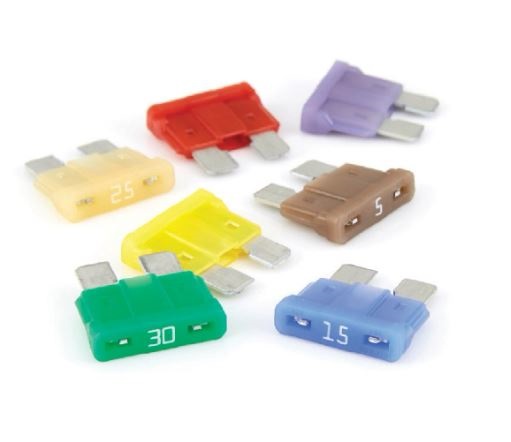
Fuses remain the most common form of circuit protection in mobile applications. They are simple, predictable, and effective at interrupting overcurrent conditions.
A fuse opens the circuit when current exceeds its rated value. Once it operates, it must be replaced, which forces inspection of the fault before power is restored.
Where Fuses Work Best
Fuses are commonly used for:
- Battery and alternator protection
- Primary power distribution
- Circuits where reset capability is not required
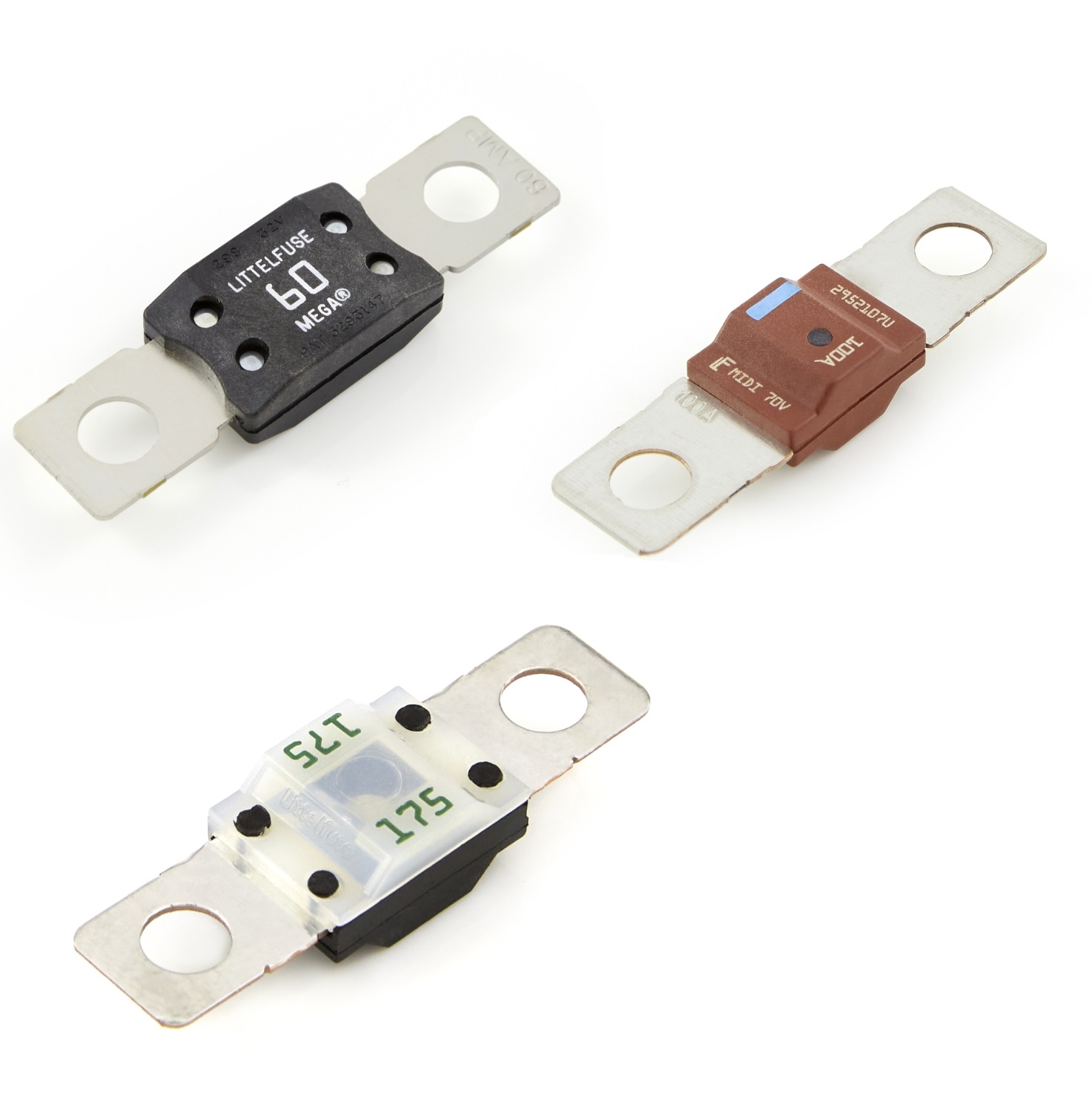
High-current circuits typically use bolt-down fuses (a few examples shown at right) such as AMI/MIDI or AMG/MEGA styles, installed in heavy-duty fuse holders designed to withstand vibration. Lower-current circuits often use blade-style fuses installed in fuse blocks for easy access and service.
LED indicator-style fuses (suct as Littelfuse's Smart Glow MINI and ATO/ATC offerings) can further reduce troubleshooting time by providing a clear visual indication of a blown fuse.
For more information about fuses for automotive and mobile equipment use, see Fuses 101: What You Need to Know.
Circuit Breakers: Protection with Reset Capability
Circuit breakers interrupt current during overload or fault conditions but can be reset after the issue is corrected. This makes them ideal for circuits where uptime and serviceability matter.
Breakers are commonly used for auxiliary loads such as:
- Lighting systems
- Communication equipment
- Pumps, fans, and motors
- Power distribution to multiple downstream circuits
Proper breaker selection is critical. The device must have sufficient interrupting capacity for the available fault current. An underspecified breaker can fail violently, causing damage to wiring, enclosures, or nearby components.
Thermal Circuit Breakers 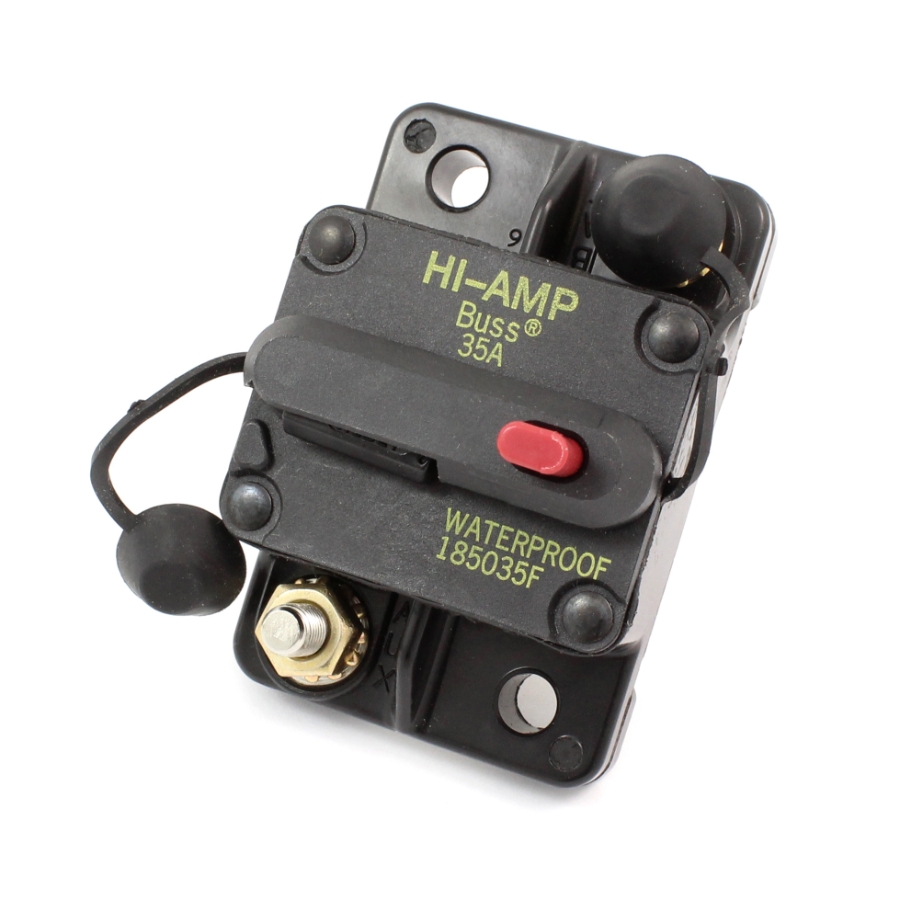
Thermal breakers respond to sustained overloads using a heat-sensitive element. They tolerate short-duration surges while protecting against prolonged overcurrent conditions. This makes them well suited for motors and other loads with predictable inrush current. Unlike magnetic circuit breakers, thermal circuit breakers are built to withstand vibration and shock in mobile applications and are thus less likely to experience nuisance tripping. For related information see How to Choose the Right Thermal Circuit Breakers and High Amp Circuit Breakers 101.
Short Stop and Blade Type Circuit Breakers 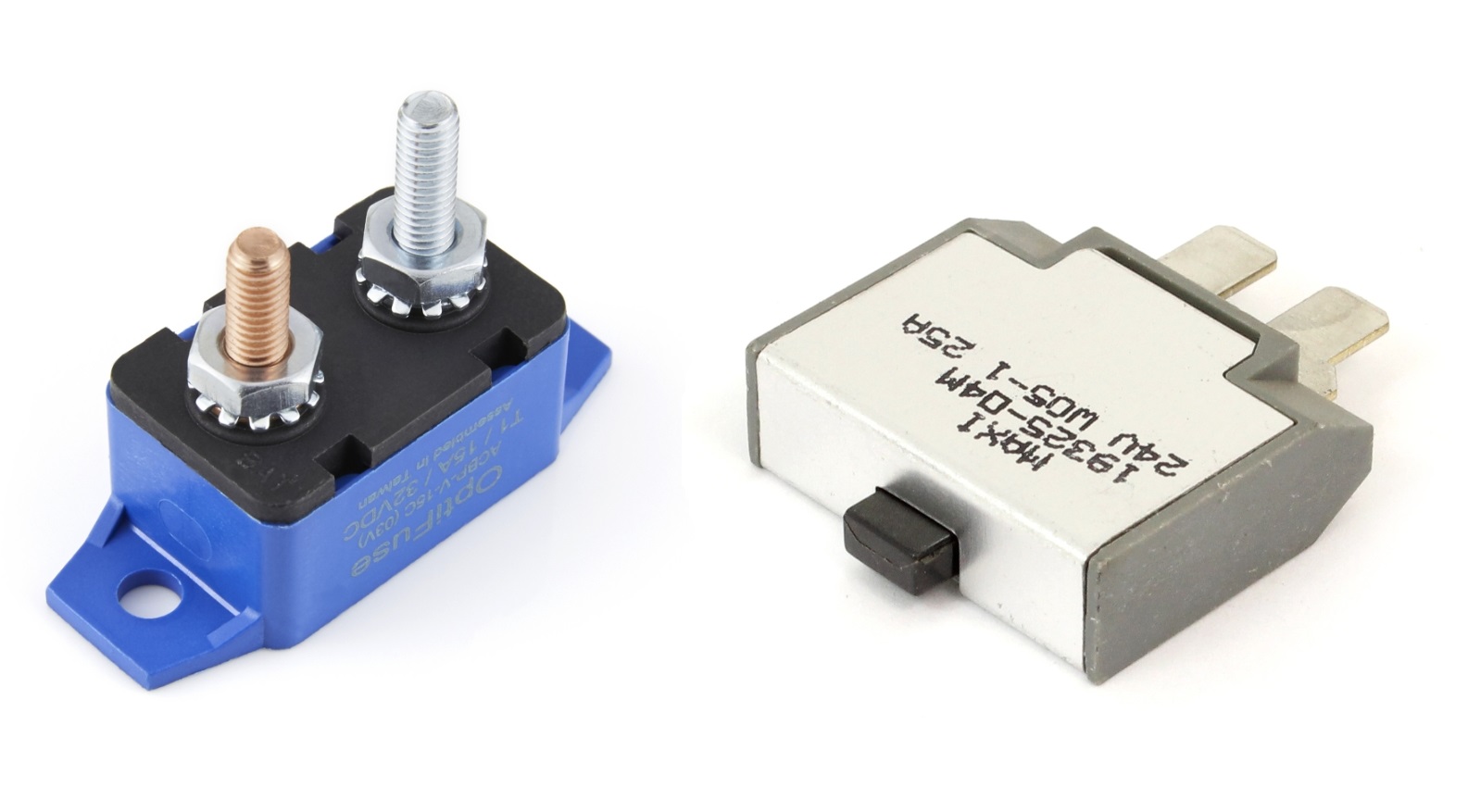
Short stop and blade-type circuit breakers are compact, economical options that sit somewhere between traditional fuses and larger, heavy-duty breakers. Many are resettable, while others reset automatically after the fault clears. While not as rugged as higher-performance breakers designed for extreme environments, their small footprint, fast action, and low cost make them a practical choice for lighter-duty auxiliary circuits and cost-sensitive installations, including camper and RV electrical systems.
Placement Matters: Protecting at the Source
Regardless of whether a fuse or circuit breaker is used, placement is just as important as selection. Protection devices should be installed as close as possible to the power source—typically the battery or distribution point—to limit the length of unprotected wire.
This approach reduces the risk of wiring damage, contains faults to a smaller section of the system, and improves overall system safety.
Key Factors to Consider When Selecting Circuit Protection
When specifying circuit protection for mobile equipment, consider:
- Wire size and allowable current
- Expected inrush and continuous load current
- Available fault current
- Environmental exposure (including temperature extremes)
- Mounting and accessibility
- Service and reset requirements
Early design decisions often establish the protection strategy, with final ratings confirmed once loads and operating conditions are fully defined.
Building Reliable Mobile Electrical Systems
Circuit protection is not an accessory—it’s a foundational element of every mobile electrical system. Properly selected and correctly installed protection devices help prevent damage, reduce downtime, and support safe operation in demanding environments.
Waytek has supported mobile electrical systems since 1970, supplying high-quality components for wire harnesses and power distribution in specialty and heavy-duty applications. If you need help selecting circuit protection for your system, our team is ready to help.
Subscribe Now
Subscribe and be the first to know when new articles are published.